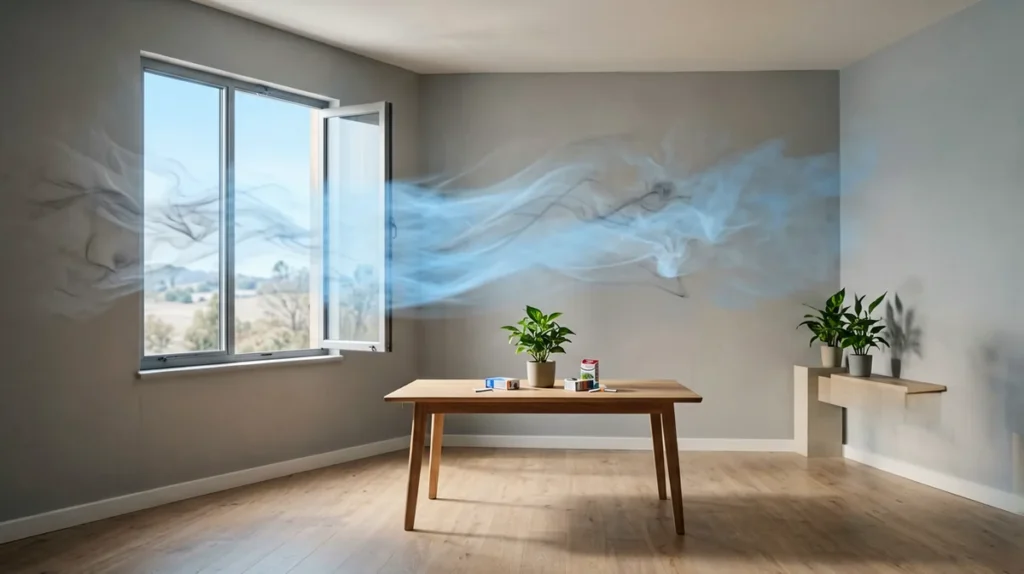
Second-hand smoke is tobacco smoke breathed in by people nearby rather than by the person smoking. It can expose adults and children to harmful chemicals, and opening a window or moving to another part of a room does not make indoor exposure risk-free. The practical answer is to keep homes, cars and other shared enclosed spaces completely smoke-free.
This guide is for Australian adults aged 18+. It is neutral health information, not a claim that any tobacco product is safe. Tobacco smoke is harmful, nicotine is addictive, and people who do not smoke should not start.
What counts as second-hand smoke?
Second-hand smoke includes smoke released from a burning tobacco product and smoke breathed out by a person who is smoking. A bystander does not need to be holding or using the product to be exposed.
Australian health organisations also use the term passive smoking. Healthdirect explains that passive smoking can affect people near someone who smokes, while Cancer Council Australia describes smoking as a preventable cause of cancer and other disease.
Why an open window is not a complete solution
Windows, fans and air conditioning may move smoke or reduce its smell, but smell is not a reliable measure of exposure. They do not create a guaranteed smoke-free indoor environment. Separating smoking from shared enclosed spaces is the clearer protective step.
| Situation | More protective approach |
|---|---|
| Inside a home | Keep the entire indoor area smoke-free rather than relying on one ventilated room. |
| Inside a car | Do not smoke in the vehicle, even with windows open. |
| Near doors or windows | Move well away so smoke is less likely to drift back into the building. |
| Shared outdoor area | Follow posted smoke-free rules and avoid exposing people nearby. |
Children and other people nearby
Children cannot choose or control their exposure and are particularly important to protect. The same smoke-free approach is also sensible around pregnant people and anyone with respiratory or cardiovascular conditions. If someone has symptoms or a personal health concern, advice should come from a qualified health professional rather than a tobacco catalogue.
A practical smoke-free checklist
- Set one simple rule: no smoking anywhere inside the home or car.
- Tell visitors about the rule before they light a cigarette.
- Do not treat a fan, open window, closed door or air freshener as a substitute.
- Keep smoking away from entrances, windows and air intakes.
- Use official Australian health advice when you need medical or quitting support.
How this fits Texvilo’s adult catalogue
Texvilo’s adult catalogue is restricted to adults aged 18+ and provides product-identification records; it does not make health or safety claims. The terms and conditions explain the adult-use and eligibility framework. For related context, read the guide to nicotine addiction facts and the explanation of Australian tobacco health warnings.
Where to get authoritative help
For current health information, use Healthdirect’s passive smoking guidance or Cancer Council Australia’s smoking information. For an urgent medical problem, follow Australian emergency guidance. People considering quitting can seek support from a doctor, pharmacist or an official quit-support service.
Bottom line
Second-hand smoke is not made harmless by ventilation. A completely smoke-free home, car and shared enclosed space is the straightforward way to avoid exposing other people. This conclusion applies regardless of brand, pack style, price or catalogue listing.