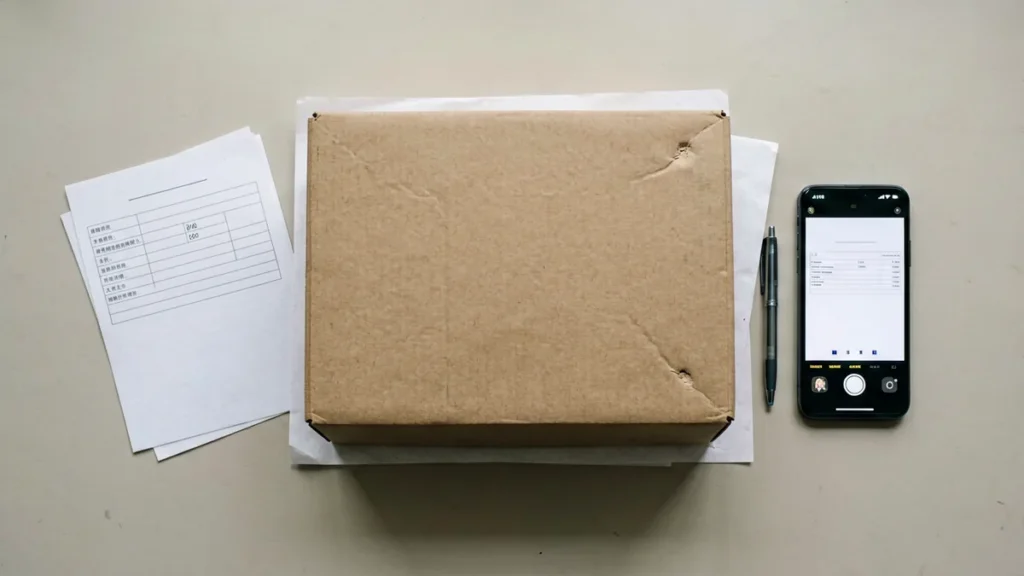
If an Australian order arrives damaged, incomplete or different from the confirmed order record, keep the item and packaging, record the issue clearly and contact Texvilo promptly before sending anything back. A useful support record includes the order number, exact product name or SKU, a concise description and clear photographs when damage or an incorrect item is involved.
This guide is for Australian adults aged 18 or older. It explains how to document an order issue without guessing at the cause or publishing private delivery information.
Start with the confirmed order record
Open the confirmation available for the order and copy the order number exactly. Then record the complete product name or SKU shown there. Do not rely on a shortened nickname, packaging colour or memory when the catalogue contains similar records.
- Order number
- Exact product name or SKU
- Date the parcel was received
- Whether the issue is damage, a fault, an incomplete order or an item different from the confirmed record
The live Texvilo catalogue can help identify the current product record, but the order confirmation remains important because catalogue information, prices and availability can change.
Describe what you can observe
Use a short factual description. State what was expected from the confirmed record and what was received. For damage, identify the visible area and condition. For an incomplete order, list the missing recorded item rather than estimating why it is absent. For a different item, compare the visible complete name or SKU with the confirmation.
Avoid claiming a cause, remedy or delivery outcome that support has not confirmed. The site policy says an approved remedy may be a replacement, refund or another solution appropriate to the issue; the result depends on assessment and applicable consumer rights.
Take useful photographs without oversharing
When damage or an incorrect item is involved, take clear photographs that show the relevant condition and enough product identity to match the record. Keep the original files available in case support asks for them. Do not place payment details, identity documents or unrelated personal information in the frame.
Keep the item and its packaging until support provides the next step. Do not send a product to an assumed address. The current Returns and Refunds policy says change-of-mind requests may be restricted for regulated or sealed goods and instructs customers not to return a product without directions and the correct destination.
Send the issue through the private support channel
Use the Texvilo contact form and include only the information needed to match and assess the enquiry. An order number, exact product identity and concise issue description create a clearer starting point than a public comment or an unlabelled image.
- Do not publish a delivery address or tracking details in a blog comment or public channel.
- Do not include card details, identity documents or unrelated sensitive information in a general support message.
- Do not discard the item or packaging while the issue is being assessed.
- Do not promise yourself a particular remedy before support reviews the record.
A compact support note
A practical note can be brief: order number, exact product name or SKU, receipt date, issue type, one or two factual sentences and a statement that photographs are available when relevant. The Shipping Policy also asks for the order number and delivery postcode when tracking is delayed or a parcel appears damaged.
Texvilo handles faulty, unsafe, damaged or incorrectly supplied goods consistently with rights that cannot be excluded under the Australian Consumer Law. This guide does not predict the outcome of an individual request; it helps preserve the information needed for an evidence-based review.